Kiwi
Actinidia chinensis Planch.
Characteristics
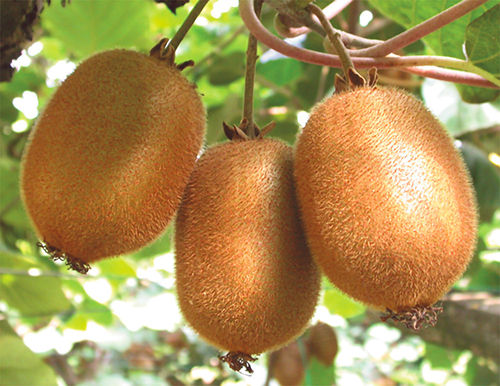
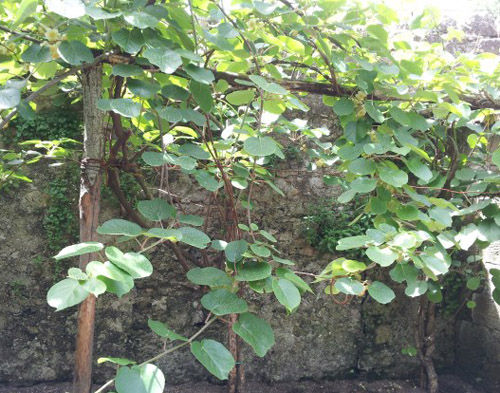
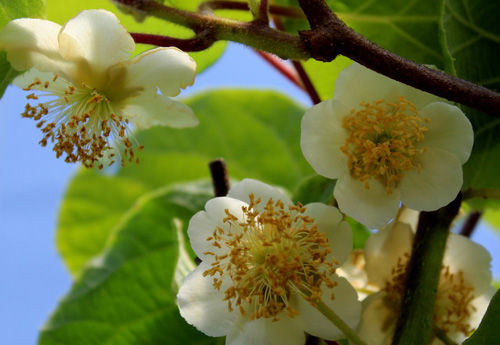
It is a genus of arboreal plants that can reach a height of 10 meters with a liana-like habit. It is a dioecious species, that is, with plants bearing male flowers and plants with distinct female flowers; the flowers are made up of 5-6 creamy white petals.
The fruits, known as kiwis, develop only on female plants, are roughly oval in shape, brown in colour, covered with hair and contain a yellow to red to green pulp depending on the species, dotted with black or purple seeds and particularly rich in vitamin C.
Image Gallery
Fruiting period
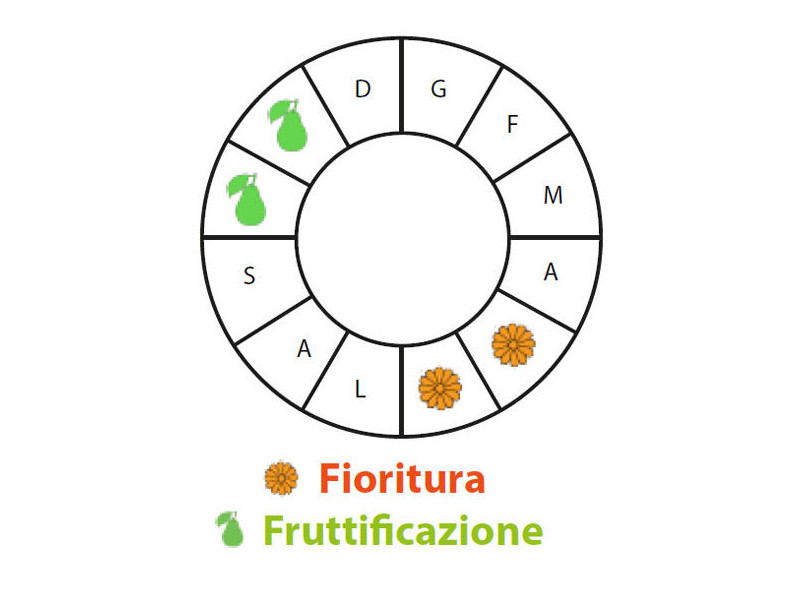
The fruits are ripe by the end of October and part of November
Image Gallery
Storia
Kiwi originates in the Far East and for centuries this fruit has been cultivated in China. At the beginning of the 19th century, a collector of the Royal Horticultural Society brought it to England as an ornamental plant. It was only at the beginning of the 20th century, more precisely in 1904, that it landed on the coasts of New Zealand, when the New Zealander Isabel Fraser brought with her some seeds of this plant returning from one of her journeys. Through various steps the seeds arrive in the hands of the nurseryman Hayward Wright who grows the plant to use the fruit for food. In Italy, cultivation is widespread in Veneto, Romagna, Friuli, Trentino, Piedmont, Lazio, Marche, and recently there has also been a high increase in production in Calabria.
Last Update Date: 27/11/24 11:29