Dogwood
Cornus mas (L.) L.
Characteristics
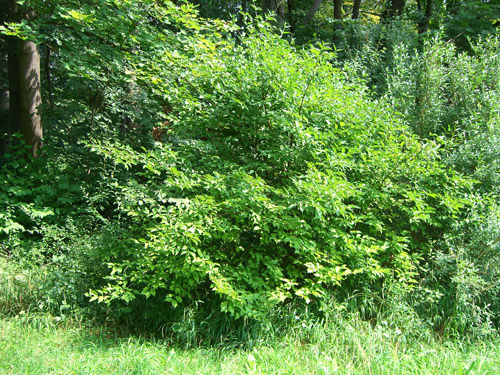
The dogwood is a medium-sized tree, if left to grow freely it reaches 5 meters in height but on average it is 3-3.5 m, the extension of the foliage is almost the same and the growth habit is expanded. The plant is vigorous and rustic, it can easily resist very low winter temperatures, and it is also very long-lived.
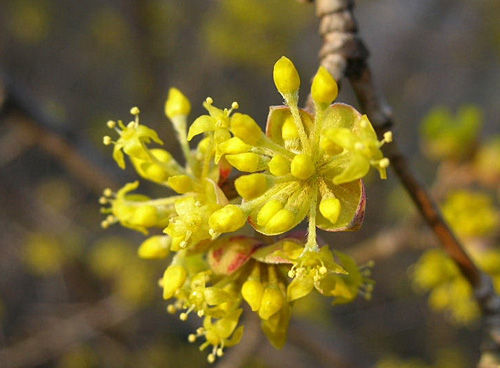
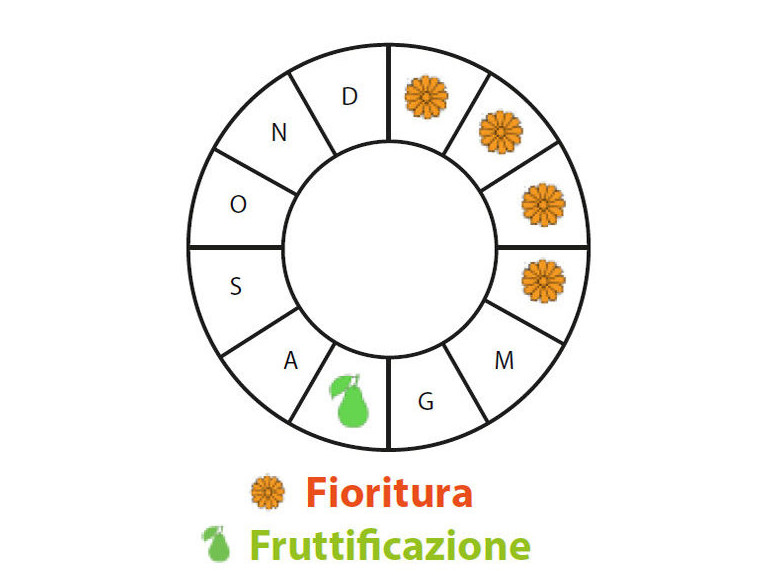
in the autumn period the leaves take on a purple-red colour. Between winter and spring, yellow flowers bloom and appear on the branches before the leaves.
Image Gallery
Fruiting period
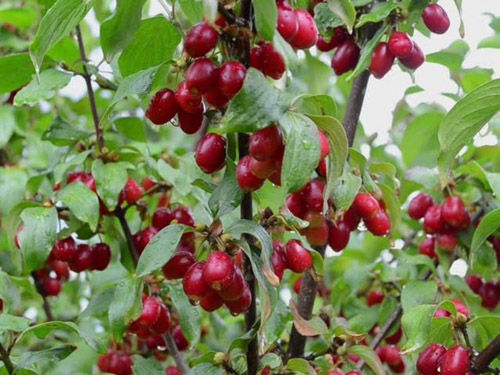
The edible fruits called carnelians, bright red drupes, can be harvested at the end of the summer period.
Image Gallery
-
-
Fruiting period
History
It has European and Asian origins where it is widely spread as a spontaneous plant on the edges of woods or solitary in hills and foothill areas. Its characteristic edible fruit seems to have been known since Neolithic times. In fact, some seeds were found in the remains of dishes, which carbon 14 dated to around 7000 years ago.
The quality of being edible has not been lost over the centuries: even the Romans and Greeks happily ate the fruit; the stem and branches of this plant were used to make agricultural tools that required long life and considerable strength: wheels, ploughs, harrows, barrel staves. In 1800 the dogwood as a fruit plant was supplanted by the dogwood as an ornamental plant and its food use was lost. The plant in Italy is not intensively cultivated, it is considered a minor fruit tree like the strawberry tree, rowan and mulberry, however it is widely spread in its natural state in almost all regions of the Italian peninsula.
Last Update Date: 27/11/24 11:32